



search
date/time

Sat, 7:00AM
broken clouds
4.8°C
NW 3mph
broken clouds
4.8°C
NW 3mph
 | Sunrise | 4:06AM |
| Sunset | 8:08PM |  |

Andrew Palmer
Group Editor
P.ublished 16th May 2026
arts
Classical Music: Mozart Horn Concertos
A spirited account of Mozart's horn writing, full of warmth and wit
Horn Concerto No. 1 in D major, KV 412 / KV 514; Horn Concerto No. 2 in E flat major, KV 417; Horn Concerto No. 3 in E flat major, KV 447; Horn Concerto No. 4 in E flat major, KV 495; Rondeau in E flat major, KV 371.
Martin Owen (horn), Manchester Camerata,
Caroline Pether (leader) & Gábor Takács-Nagy (conductor)
Chandos CHAN 20377
chandos.net
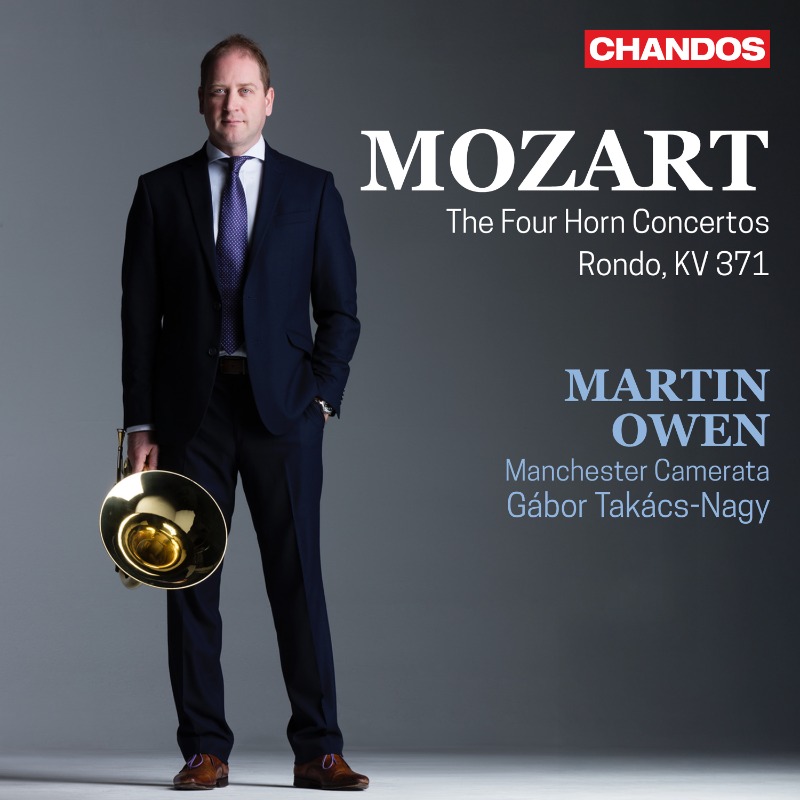
Martin Owen, the distinguished principal horn of the BBC Symphony Orchestra, has thought carefully about how to differentiate the works. "In this recording, we have attempted to portray a more youthful vigour in the earlier works", he writes, "compared to the Concerto in D, in many ways a swan song for both soloist and composer, in which I hope our performance shows more depth of tone and a higher level of maturity." He also notes a fascinating piece of detective work: in 1990, sixty bars of music surfaced at a Sotheby's auction and were subsequently confirmed as belonging to the Rondeau, KV 371. "When I was young, I only knew the work without these bars and always felt that there was too abrupt a change into the next section. Now it makes complete sense."
That sense of considered scholarship pays dividends throughout. The Manchester Camerata under Gábor Takács-Nagy are light on their feet and airy in texture, with every inner detail allowed to speak. The strings have tremendous warmth—never plush for their own sake but glowing in the slow movements and crisp in the tuttis. Owen rises to every technical demand with polish and poise; his phrasing is beautifully shaped and his dialogue with the orchestra subtle and complementary rather than competitive.
The lyricism is what lingers. Owen's tone has a singing quality that suits Mozart's writing perfectly, and by the time one reaches the famous finale of the Fourth Concerto, the rhythmic fizz is irresistible. The newly completed Rondeau in E flat, KV 371, makes a delightful five-minute pendant— and Owen is surely right that the restored bars resolve what had always felt like an awkward seam.
Recorded in the warm but clear acoustic of The Stoller Hall at Hunts Bank in Manchester, everything is stylishly presented. Owen makes it all sound so simple — which, of course, is the hardest trick of all.