



search
date/time

Thu, 1:00AM
overcast clouds
13.7°C
S 8mph
overcast clouds
13.7°C
S 8mph
 | Sunrise | 6:12AM |
| Sunset | 5:48PM |  |

Andrew Palmer
Group Editor
P.ublished 18th July 2026
travel
Paris Is Paris
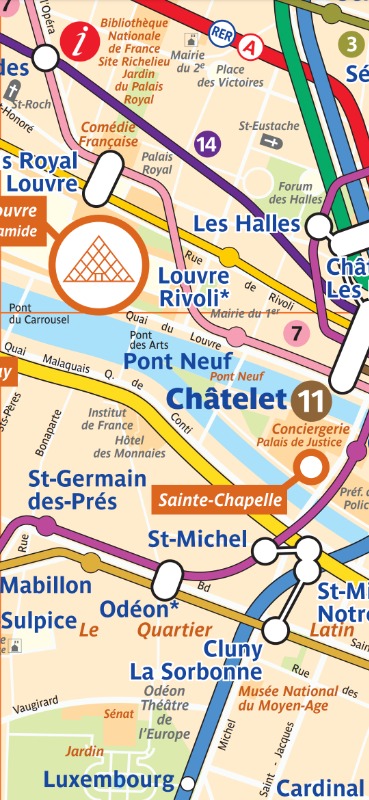
The city has had an unlikely publicist of late in Netflix's Emily in Paris, in which an American in an ill-advised beret manages a fresh romantic entanglement every episode—and, somehow, never once queues for anything. Emily's flat, for what it's worth, sits a stone's throw from the Panthéon; her office is a stone's throw from the Louvre, tucked by Place de Valois and the lovely Jardin du Palais Royal—the production team, at least, knew their postcodes. I go for rather quieter reasons: the music; the organs (the pipe kind); and a city that manages to be a dining capital, an open-air museum, and, on the right corner, a properly excellent bistro, all at once.
Paris divides opinion—people either fall for it hopelessly or consider it exhausting. I arrive every time with the same energy, and I leave every time having found one more reason to come back. For Londoners, the Eurostar makes it two and a half hours from a station you can walk to, and there is, frankly, no excuse. The rest of us, further north, have to work a little harder for it.
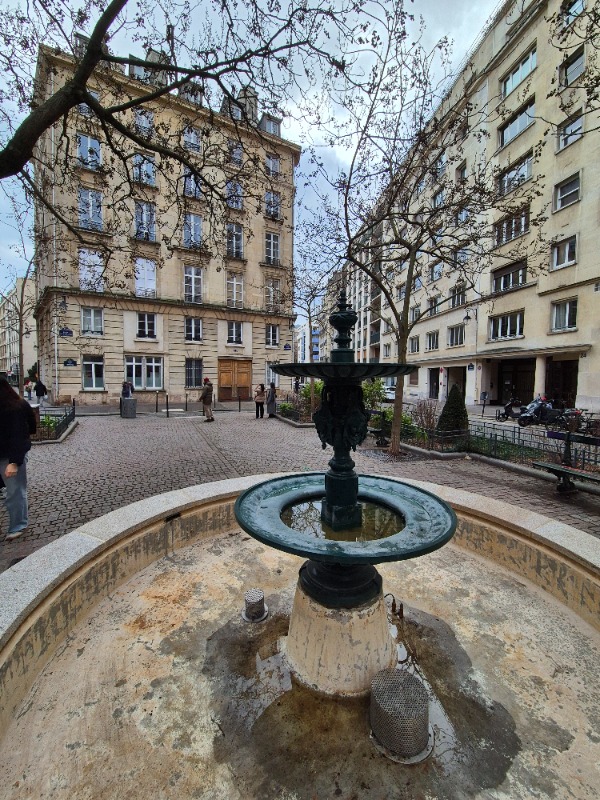
Emily in Paris apartment
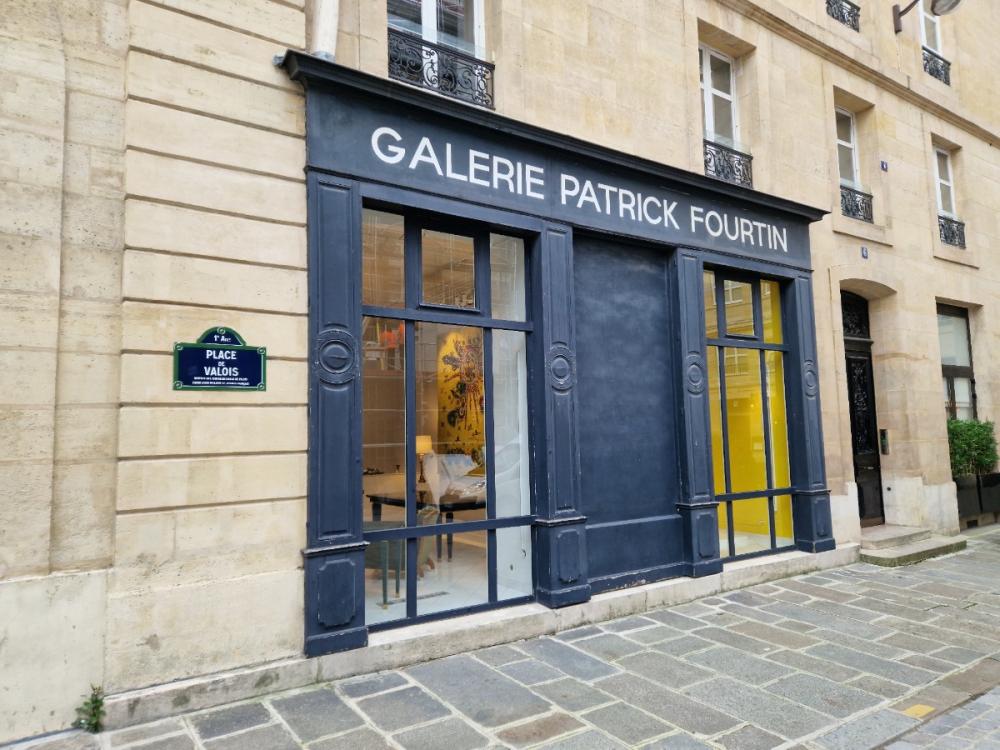
Emily in Paris often uses this facade
Photo: Graham Hermon
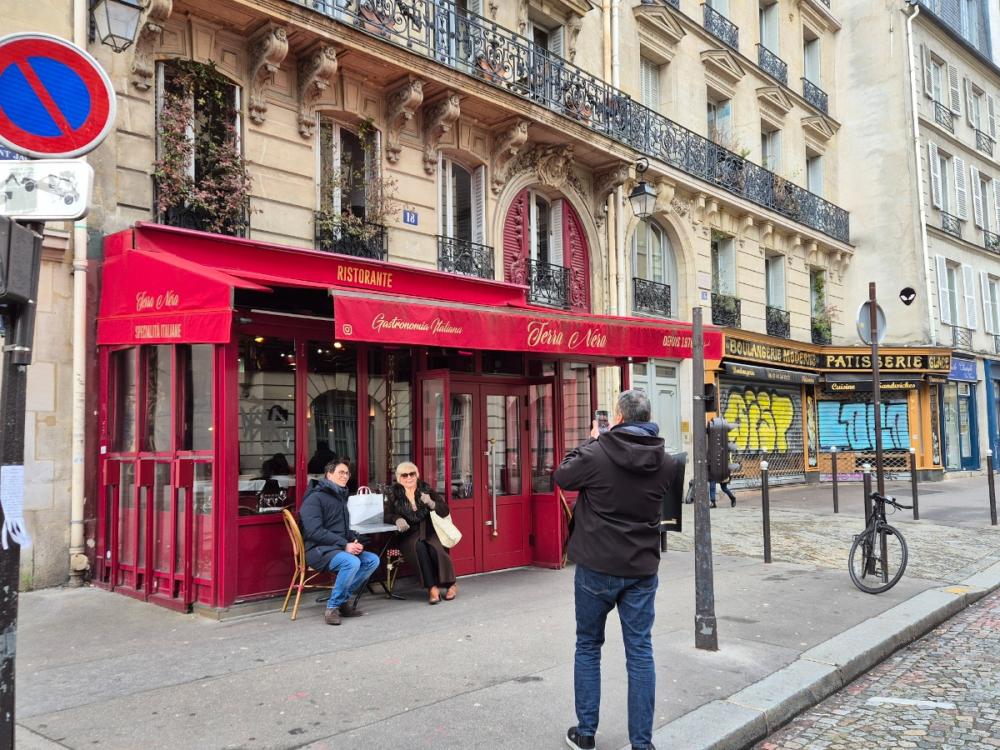
Emily in Paris Gabriel's Restaurant
Getting there, and a small grumble
The obvious answer for northern readers is a direct flight — Jet2 out of Leeds Bradford, or easyJet from Manchester. Jet2 lands at Terminal 3, from where you're decanted onto a bus for the three-minute run to the terminal building — always a faintly undignified start to a city break, wherever you've flown in from. EasyJet lands at the huge Terminal 2. Both, though, are close to the main train route into the centre of Paris. My one piece of advice: don't book a case into the hold if you're flying easyJet. The queues on the way home are dreadful. If easyJet could implement the self-service bag drops that UK airports have already established, it would greatly improve the situation, and I'm not entirely convinced that French employment law is the obstacle, regardless of the justification.
Living in North Yorkshire, though, I've increasingly taken to a different route altogether: LNER up to Edinburgh, then the short flight on from there. It's no longer possible to join that line from North Yorkshire's own county town—LNER cut out Northallerton some time ago, which is a tremendous shame, whatever the case for freeing up track space and shaving minutes off the timetable elsewhere. It remains, whatever the operational logic, a considerable inconvenience to those of us who used to step on there. These days it means starting from York or taking a local train to Darlington first. However, once you're on the East Coast line, it more than compensates: gaze right through Durham for a genuinely stunning view, continue through Newcastle, and then enjoy the long run up the coast, which is marvellous in its own right. Edinburgh Airport, for its part, is efficient and quick, and the airport bus into Waverley takes a reliable thirty-five minutes. It's remarkable how fast the whole thing runs on the way home—land, through customs, on the bus, and to Waverley—before you've quite finished reading the paper.
There are decent deals to be had on LNER, though these days anyone opting for the first-class food has, on several counts, made the wrong call—and I won't even start on the buffet's sandwich selection. I do wonder, sometimes, whether LNER consults a customer panel on any of these issues.
Get yourself a proper itinerary before you go and work it out arrondissement by arrondissement. Planning is almost as rewarding as wandering in Paris, which is a more challenging feat than it appears.
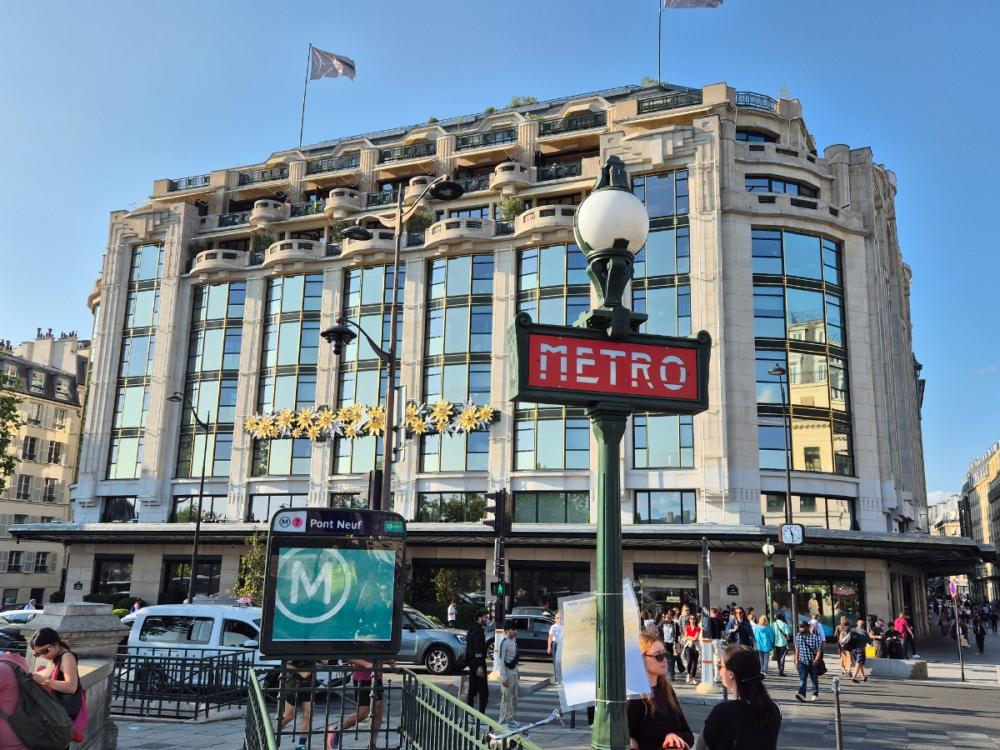
La Samaritaine
It pays to stay central, and Pont Neuf — opposite the wonderful department store La Samaritaine, in the 1st — suits me well enough that I've never seriously looked elsewhere. Paris is a walking city, and walkability is really the whole point of it. On a Saturday morning, there is a particular pleasure in following the Seine among the joggers and keep-fit enthusiasts before the tourists have properly woken up; a stroll to the Eiffel Tower is no hardship either. Saint-Germain in the 6th, the Marais in the 4th, and the streets around the Louvre—all close enough to reach on foot, which is rather the point. The Métro is efficient, but it is somewhat beside the point if you've chosen your base well. You want to be able to walk home from dinner, not commute to it.
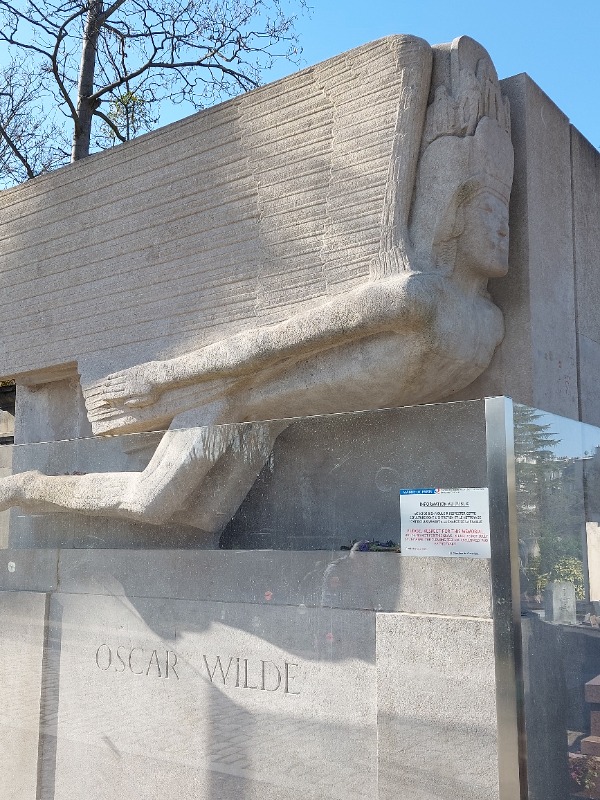
Oscar Wilde grave at Père Lachaise
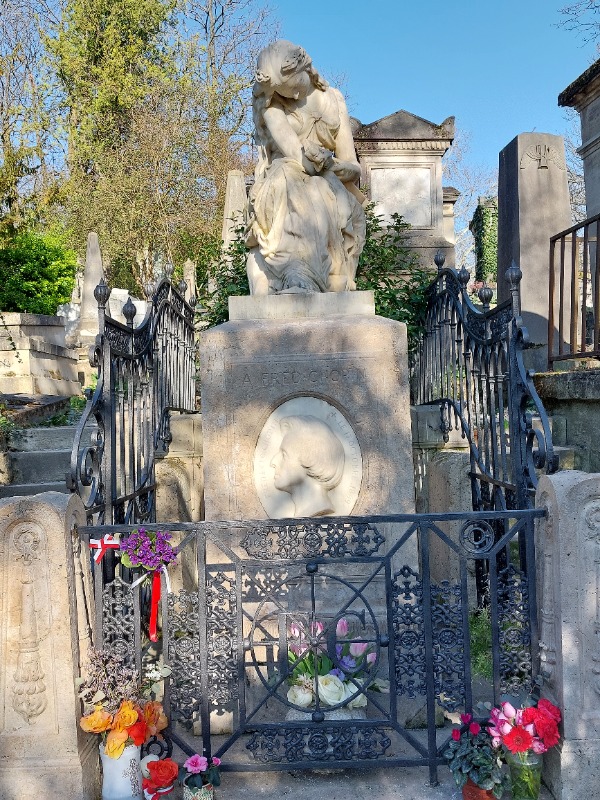
Chopin's Grave at Père Lachaise
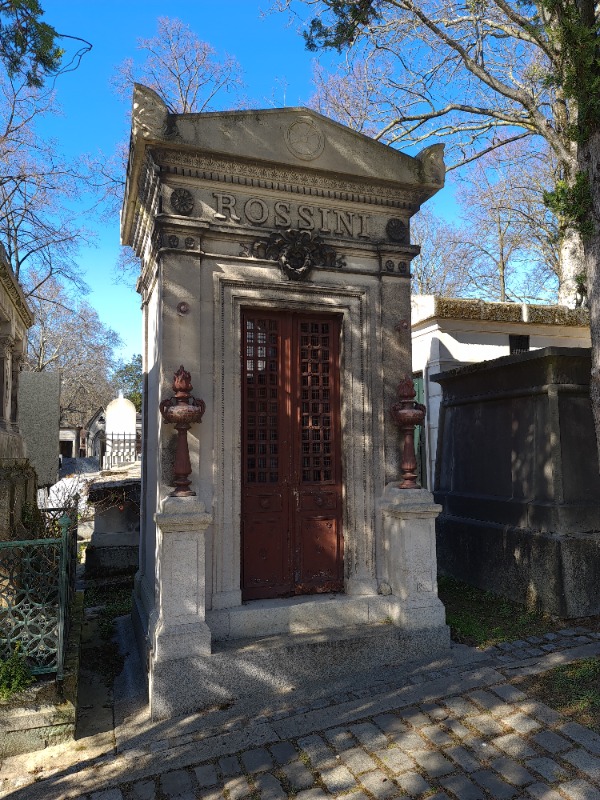
Rossini's grave at Père Lachaise
The famous graveyard
Père Lachaise is one of the city's most atmospheric sights, more so than any museum queue. Within its grounds you'll encounter all the greatest hits—Chopin, Piaf, Wilde (his tomb now guarded by a perspex screen against decades of lipstick kisses), and Jim Morrison (manage your expectations: smaller and shabbier than the myth suggests). The lanes are cobbled and the ground is hilly, and it is entirely possible to lose an afternoon wandering among a thousand near-identical grey chapels—wear proper shoes, and don't hurry.
Afterwards, a short walk to La Baron Rouge near the Bastille makes for a welcome breather: wonderful wines, cheeses, and charcuterie in a genuinely lovely neighbourhood, the sort of place that asks nothing of you beyond a satisfactory appetite.
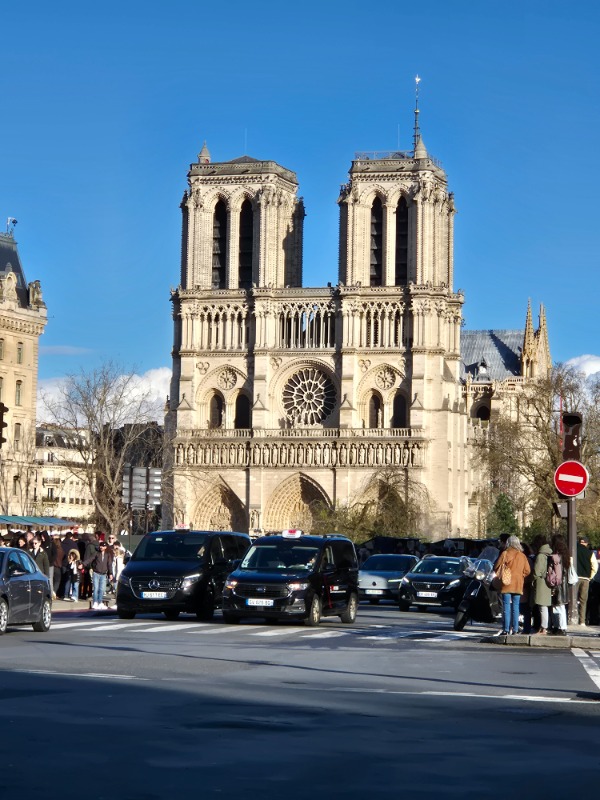
Notre Dame
Photo: Graham Hermon
I have visited Notre Dame many times, and my first proper look at the newly restored cathedral left me distinctly uninspired. Magnificent from the outside, certainly—but inside, the walls have been cleaned so thoroughly, and to such a startling effect that they look freshly painted, which is going to need some time to bed in before they feel like a church rather than an exhibition about one. I had anticipated a profound emotional response. I was, instead, mildly impressed by the joinery. It is, without question, a remarkable feat of restoration and craftsmanship, and that alone is worth something. But the crowds are unbearable, and the noise inside the building means whatever ambience remains is short on reverence. I find myself missing the old building's soot-stained gravitas rather more than I expected to.
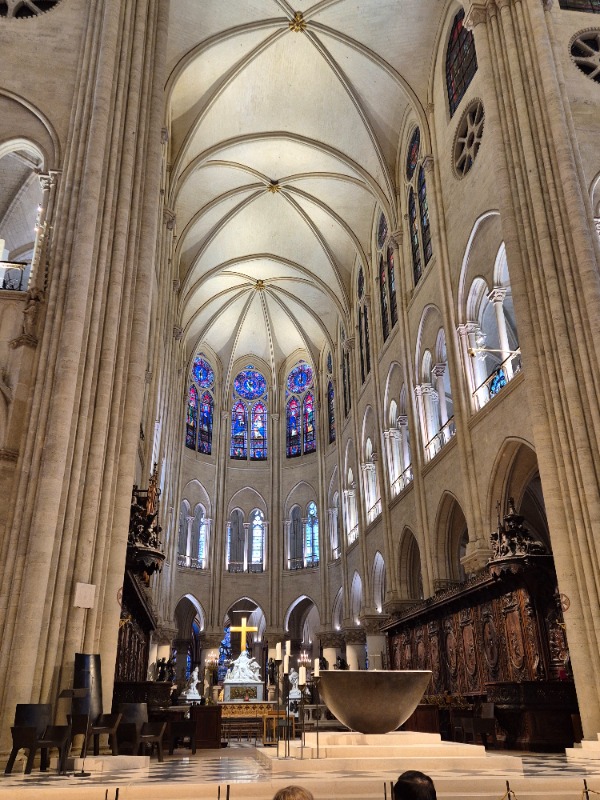
Interior of Notre Dame
Photo: Graham Hermon
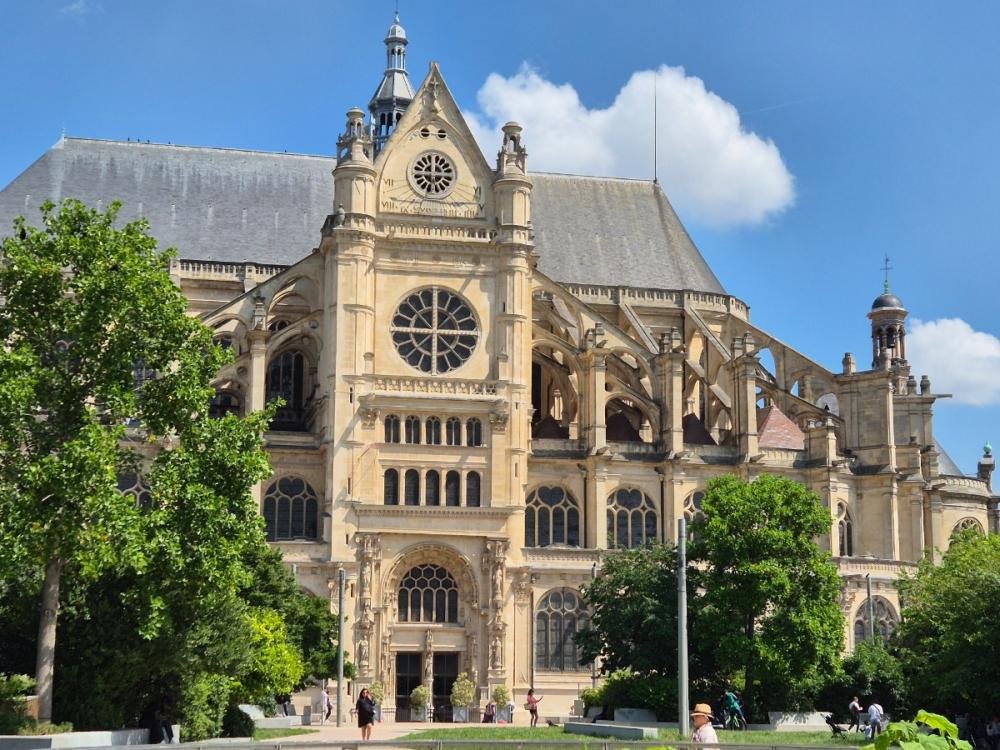
St Eustache
Photo: Graham Hermon
If, like me, you are an organ enthusiast, there is nowhere better than St. Eustache. Its Van den Heuvel organ, one of the largest in France, sits inside a building whose Gothic structure and Renaissance detailing give the instrument a fitting home—this was, incidentally, a setting for The Da Vinci Code. The weekly Sunday auditions mean you can hear it properly rather than file it into a concert ticket: the pedal division, twenty stops including the 32-foot Principale Basse and Contre-Bombarde, is capable of genuine excitement. French organists, like the French more generally, favour their own—expect a good deal of Vierne, Duruflé, and Dupré, and don't be surprised if Bach is registered rather differently from how a German or English organist would play him.
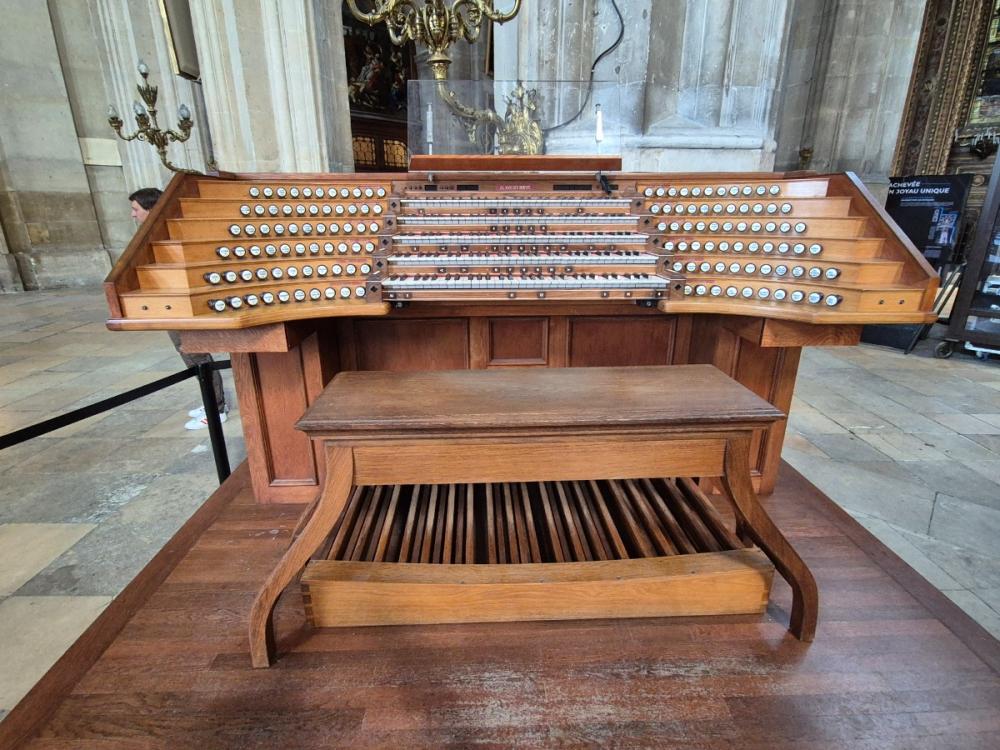
Organ Console St Eustache
Photo: Graham Hermon
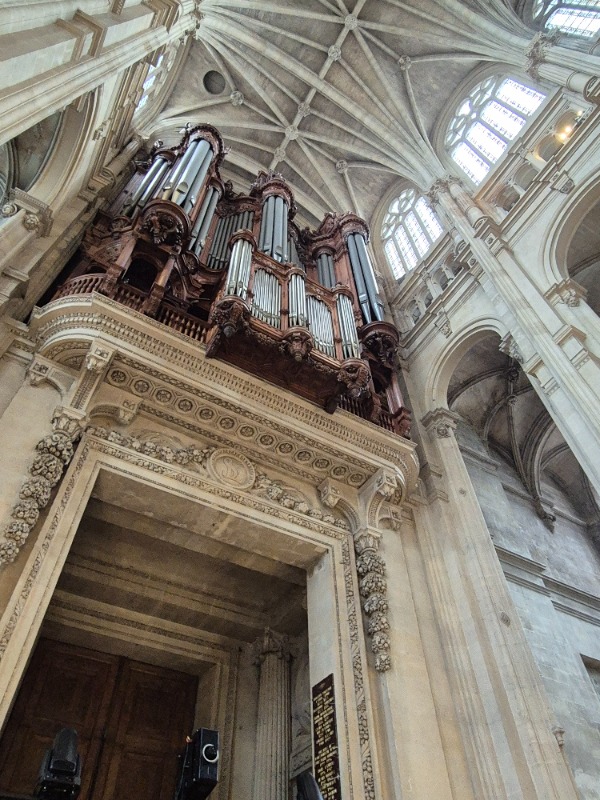
St Eustache Organ Case
Photo: Graham Hermon
St. Sulpice, meanwhile, houses the Cavaillé-Coll—one of the outstanding Romantic instruments, with a lineage of titanic organists behind it in Widor and Dupré. On the right Sunday, the truly committed can catch the noon audition at St. Sulpice and amble across in time for the five o'clock at St. Eustache. Near the Panthéon, the church of Saint-Étienne-du-Mont is worth the detour too, not least because it sits opposite the house—now marked with a blue plaque—where Duruflé lived.
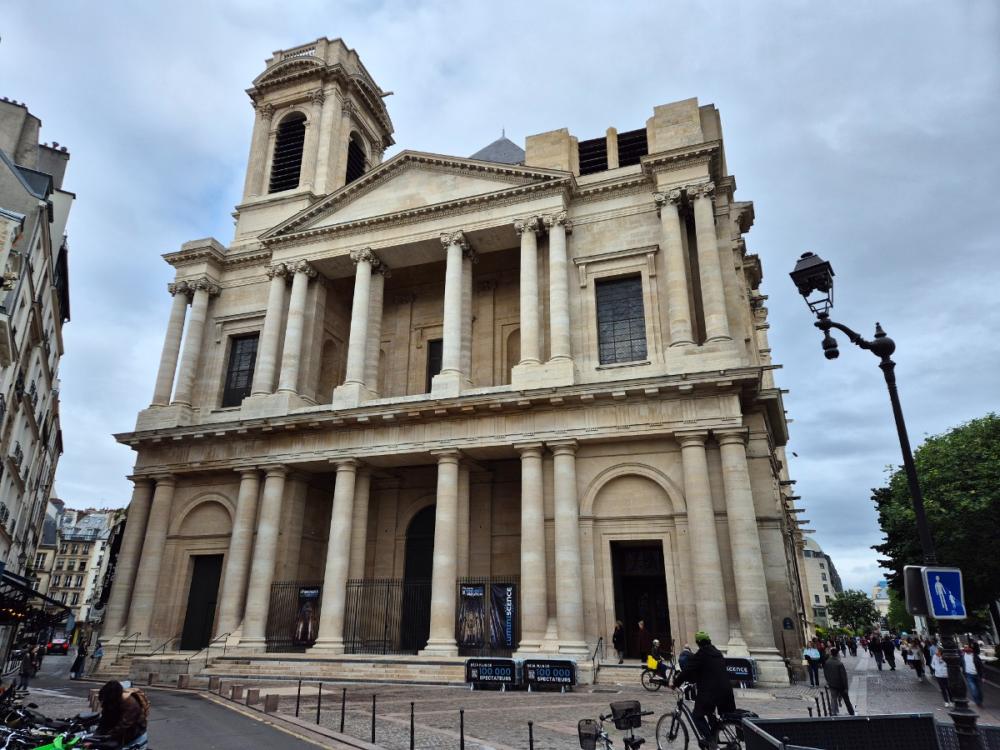
St Suplice
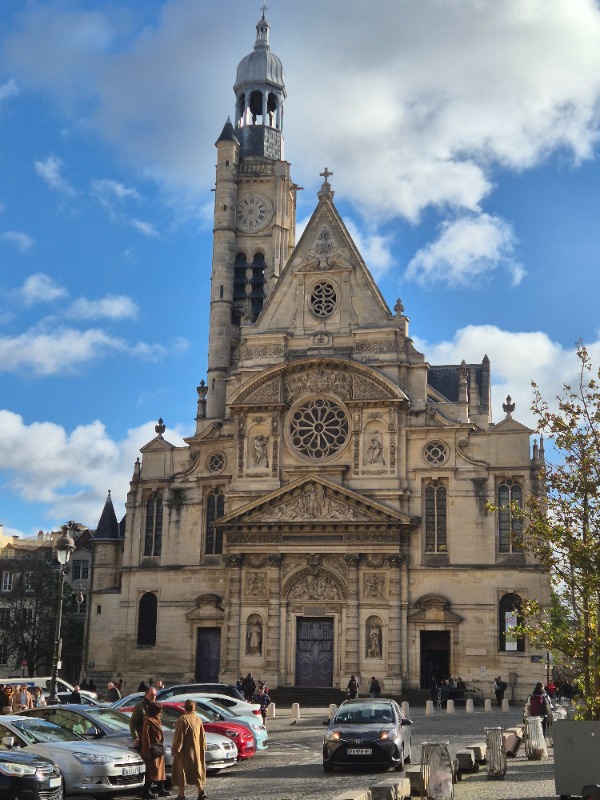
Saint-Étienne-du-Mont
Photo: Graham Hermon
The Sunday auditions themselves are informal affairs, held after Mass, where you stand close to the case rather than sit filed into rows for a ticketed recital. Unlike the newly restored Notre Dame, the sound here still seems to come up out of the stonework itself, revealing something that the scrubbed white walls elsewhere have rather flattened out.
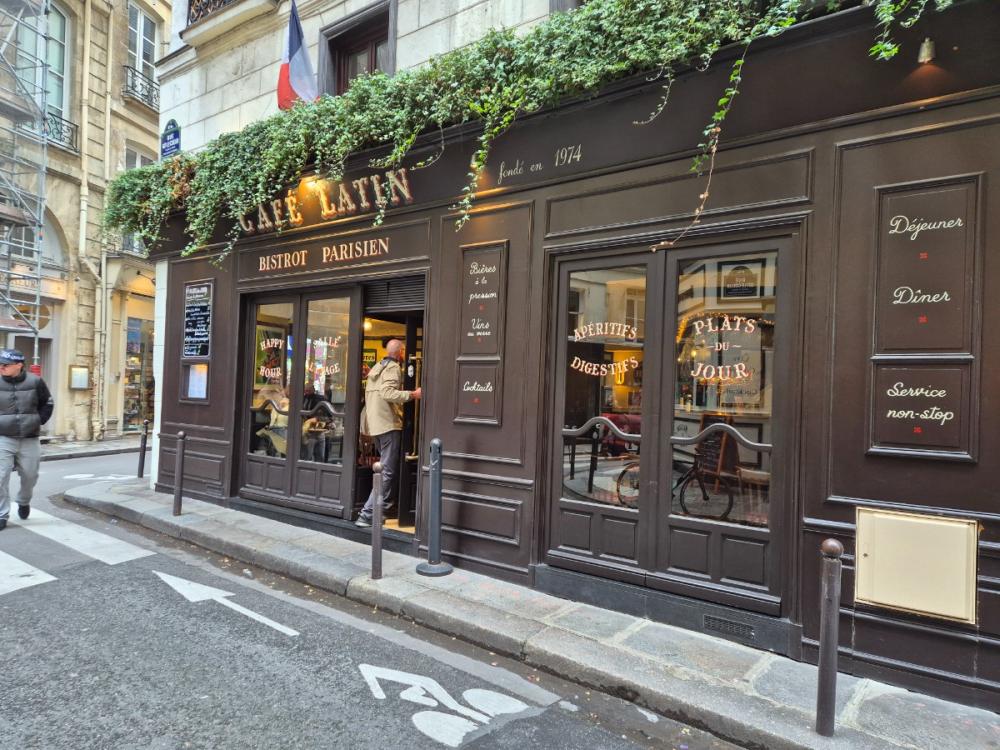
Cafe Latin
Paris is celebrated for its dining, and the only sensible response is to go and experience it properly rather than take the reputation on trust. The bistro is really the city's true temple of pleasure, unrivaled in its particular charm—small rooms, short menus, and a waiter who has clearly seen everything twice—and there is always a new wave of them opening somewhere just as an older wave settles comfortably
into being an institution.
Near St Eustache is a small bar I return to every year without fail, whether the Six Nations send England to Paris or keep them at Twickenham—lovely French friends, a small room, excellent steak, and better wine. That's as much as I'm prepared to say about it; some things are worth keeping to yourself. If you can find a Pelforth Blonde while you're there, order it—a proper French beer,
increasingly hard to track down, and worth the search.
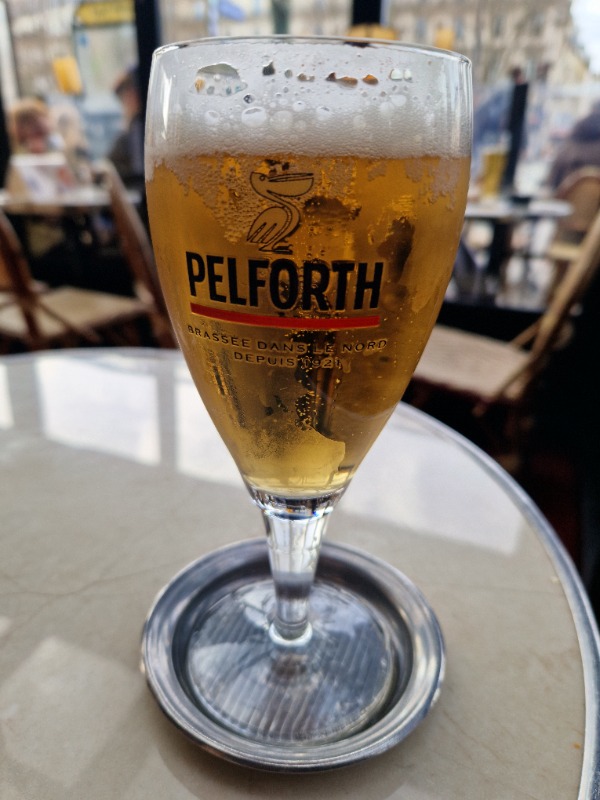
Sampling a Pelforth
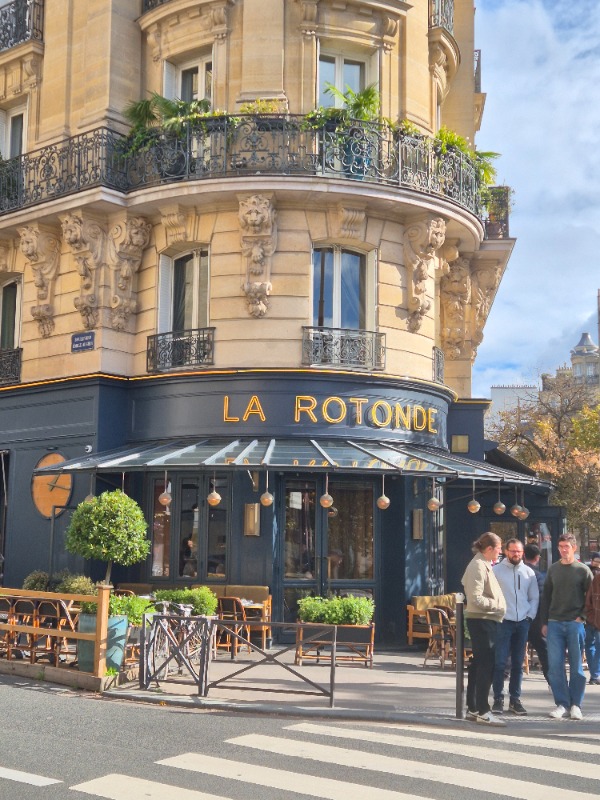
Who dines here?
Elsewhere, on my way to the Musée Marmottan Monet, I stopped at La Rotonde—a small bistro on the corner of Boulevards Raspail and Montparnasse that a Monsieur Libion bought at the start of the twentieth century with little idea it would become one of the most important institutions of Parisian life. Emmanuel Macron is said to have met with supporters here while planning his new party, though whether that's fact or Parisian folklore, I couldn't honestly tell you.
Not far away is Chez Denise, where a good many French socialites have worked their way through generously rustic portions. Where you choose to eat in Paris is entirely your own business—I'd point you to my review of Polidor and to Café Latin, just down the road from my hotel on the pretty little Quai des Grands Augustins. Eating out here is a genuine joy, though not always where you'd expect: a Michelin-starred tasting menu at La Granite left me thoroughly disappointed, the ingredients handled with something closer to aggression than subtlety, and wondering exactly what people go to these places hoping to find. La Coupole, by contrast, was a delight—proper refinement rather than the performance of it.
For something simpler, the Merci Jerome patisserie chain offers excellent pastries and bread, and it knows how to use oat and soya milk in a way that some British customers will appreciate, as these options are not widely available. But the real pleasure of Paris, whatever the venue, is the rhythm of the day itself—a wine bar, a café, a restaurant, and the unmatched sport of watching everyone else go by. Nowhere is people-watching better.
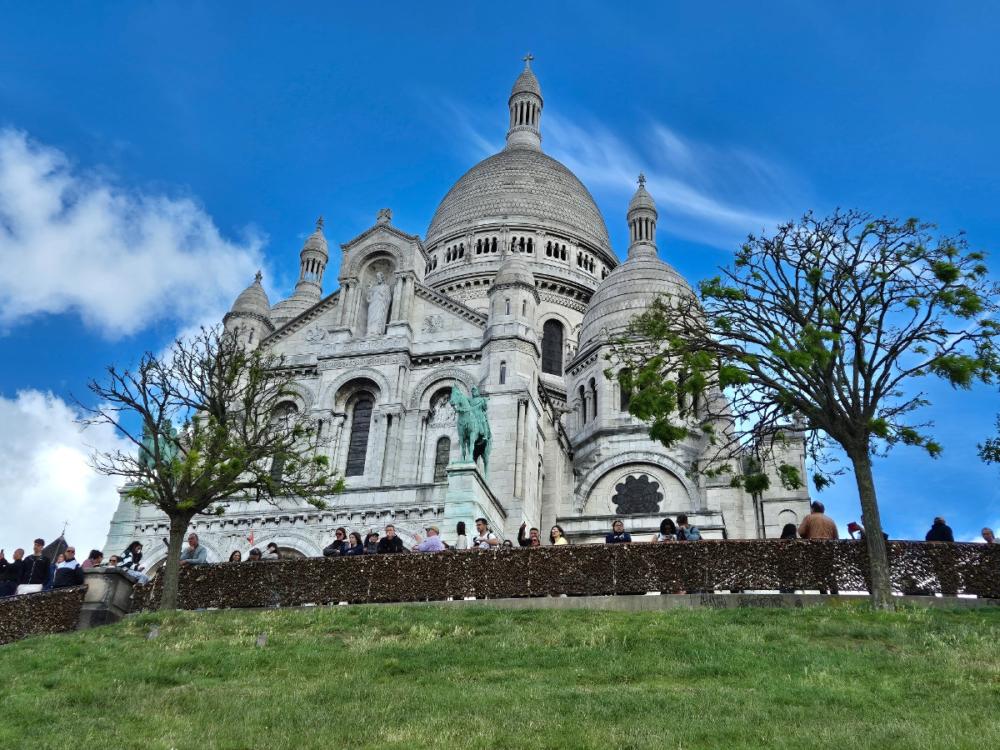
Sacré-Cœur
There's a strange romance to the traffic circling the Arc de Triomphe—twelve avenues converging with no visible right of way and, apparently, no insurance claims to speak of, French drivers negotiating the chaos with a shrug the rest of Europe would do well to learn from. The climb to the top of the Arc is worth the legs it costs you: a clean sweep down the Champs-Élysées in one direction and out across the rooftops in the other.
Which raises a fair question: is the Eiffel Tower itself still worth the queue? The Pompidou Centre, which for years offered arguably the best panorama across the city's rooftops and landmarks, closed in late 2025 for a major, multi-year renovation and will remain shut until 2030. So, for now, the Eiffel Tower will have to do—and it does.
even if you've seen the postcard a thousand times.
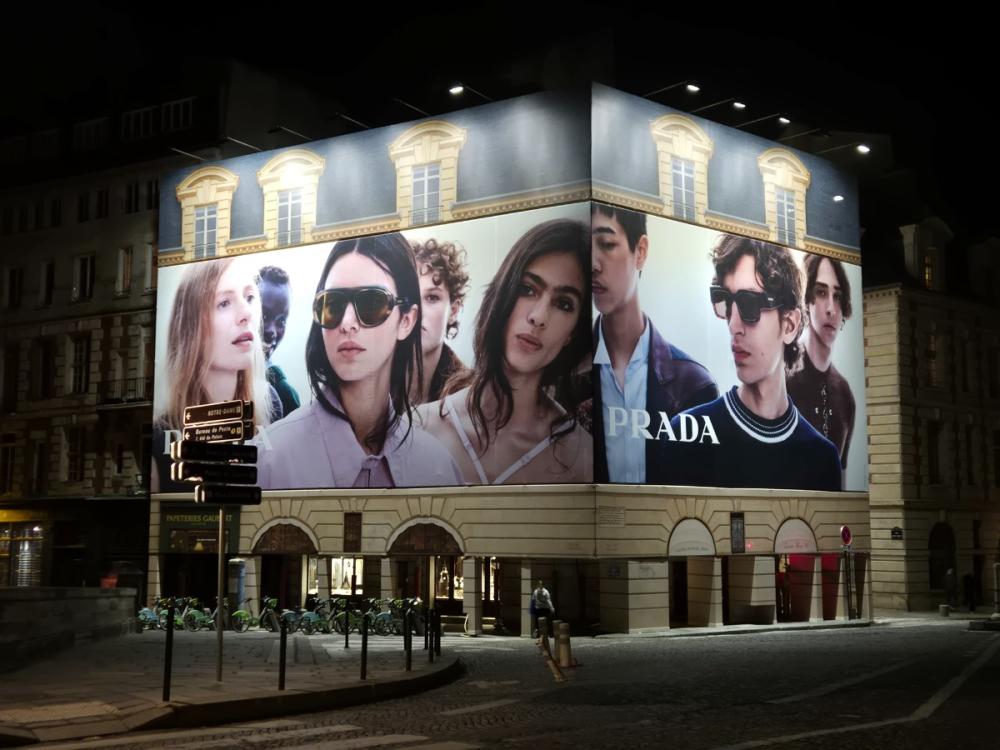
Classy advertising
Photo: Graham Hermon
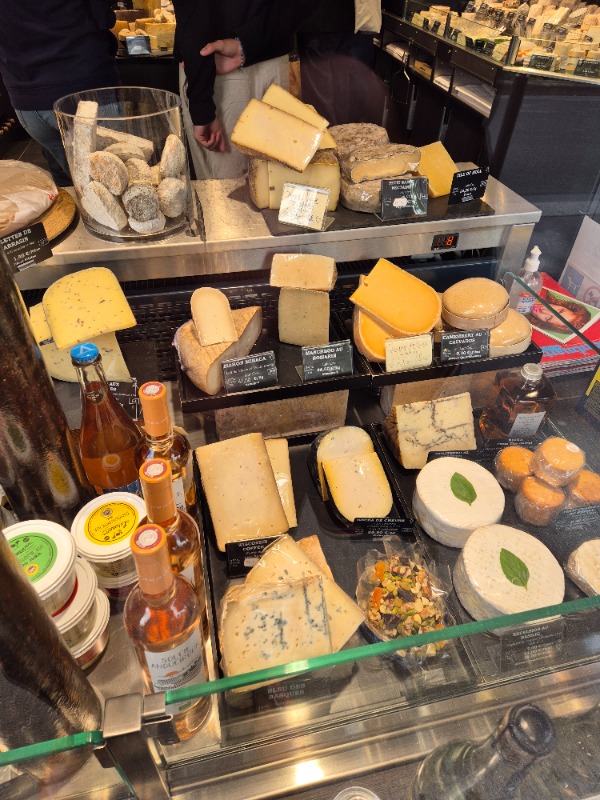
Shopping in Montmartre
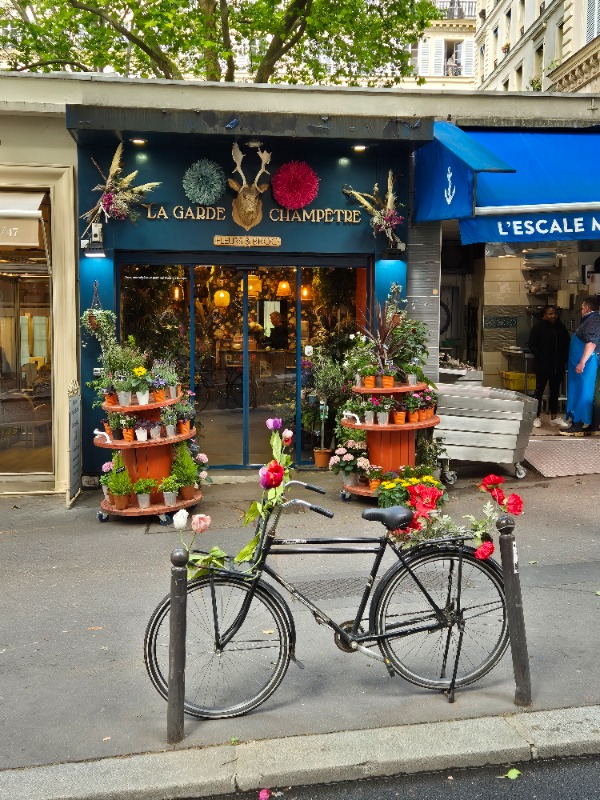
Shopping in Montmartre
Montmartre, slowly
The approach to Sacré-Cœur is worth as much time as the basilica itself—a walk past cheese shops and patisseries, past fresh fruit and veg arranged like a small, deliberate symphony of colour, before the streets narrow and climb towards the dome. Just below the basilica, the Rue de l'Abreuvoir is the reason to linger: a curving, cobbled street with the sort of old-Paris charm that photographs well precisely because it isn't trying to. It's home to the pink café La Maison Rose, about as beautiful a building as the city has to offer. What's not to like?
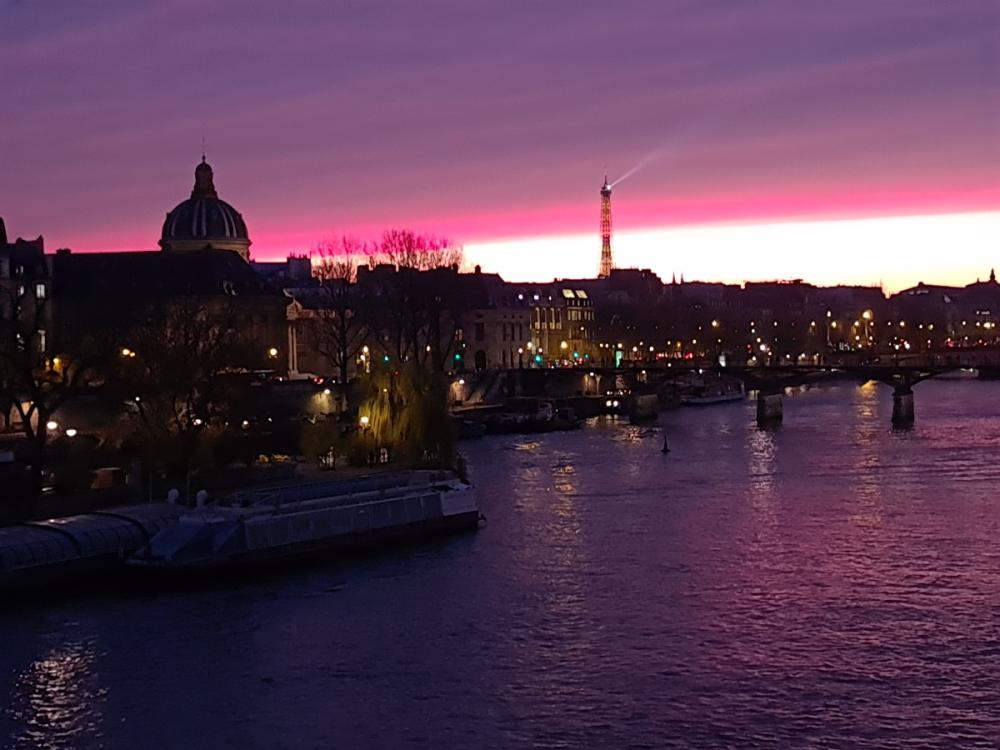
Twilight over the Seine. The effects caused by a sandstorm over the Sahara Desert
Photo: Graham Hermon
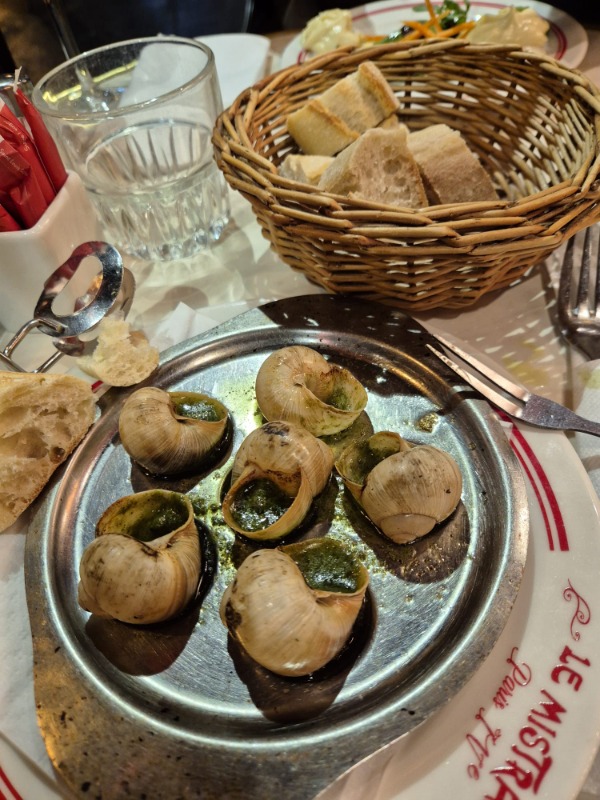
Escargots
There are endless things to do here, as long as you stay central and do your research first — build yourself a list that will keep rewarding you on every return. Don't be put off by frogs' legs (they taste, disappointingly, of chicken) or snails drenched in garlic and parsley—jump into the culture properly rather than admiring it from the pavement.
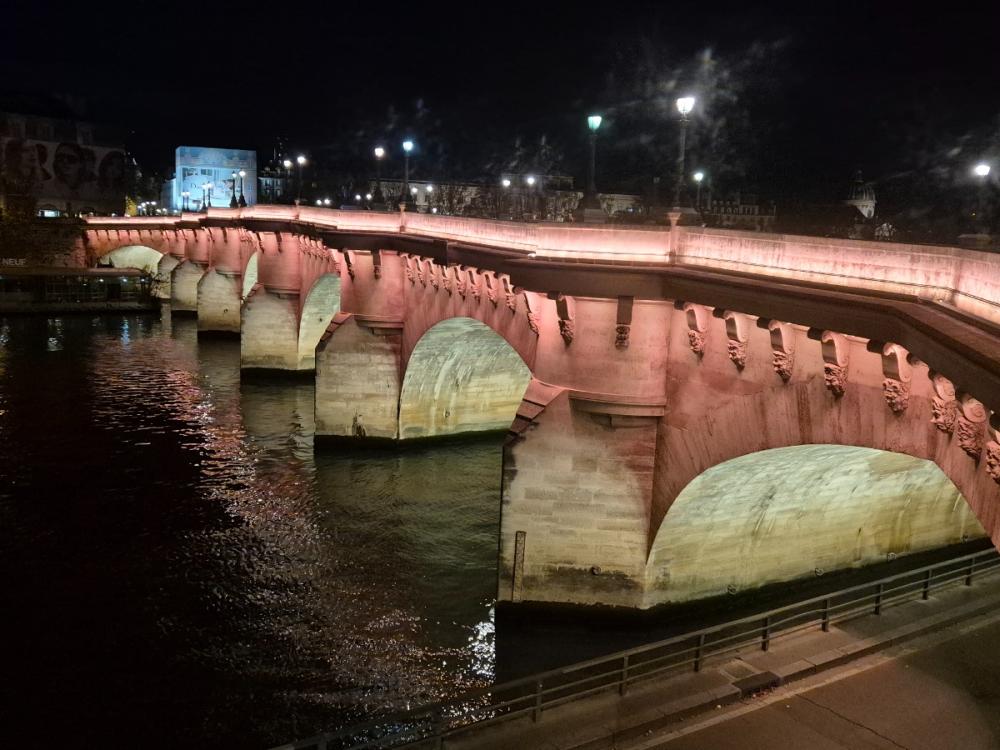
Pont Neuf at night
I'll be back before long, because soon is never soon enough, and next on my list is Claude Monet's house and garden at Giverny. I'd be surprised to hear a single dissenting voice. Paris is Paris.
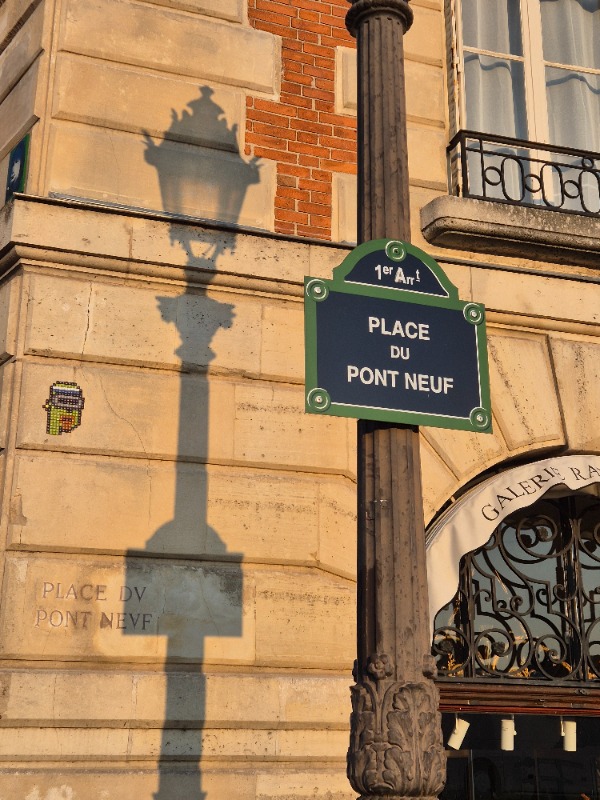
Photo Graham Hermon
Jet 2 Flights click here
easyJet Flights click here
Organ Auditions: St Suplice click here
St Eustache click here
Also by Andrew Palmer...
Business Leaders Tell The Chancellor: Now Show US The MoneyDum-Di-dum-di-dum-di-dum… Ambridge Comes To HarrogateClassical Music: Mentor And Muse: Songs By Vaughan Williams And The Women Around HimClassical Music: KinClassical Music: Neeme Järvi Conducts ShostakovichThe shortened address for this article is: newspub.uk/1207z